Blending requirement of SAF
It is not only important to abate noise. Reducing CO2 emissions is at least as important. Through fleet renewal, operational measures (including a review of airspace in Europe) and blending Sustainable Aviation Fuel (SAF) with kerosene, we will achieve our target of a 30% reduction in CO2 emissions by 2030. The more SAF is blended, the lower the CO2 emissions from air traffic.
More sustainable fuels: More sustainable fuels are known as Sustainable Aviation Fuel (SAF). Biokerosene is an important means of making aviation more sustainable, as it can significantly reduce CO₂ emissions.Although the term may suggest otherwise, these fuels are not yet 100% sustainable. They emit 70 to 90% less CO₂ compared to fossil kerosene, but some emissions therefore still remain. The European Union aims to ensure that by 2030, 6% SAF is blended into all flights, of which 1.2% is synthetic kerosene. A European blending mandate encourages investment in this technology and prevents Europe from adopting different, uncoordinated approaches.
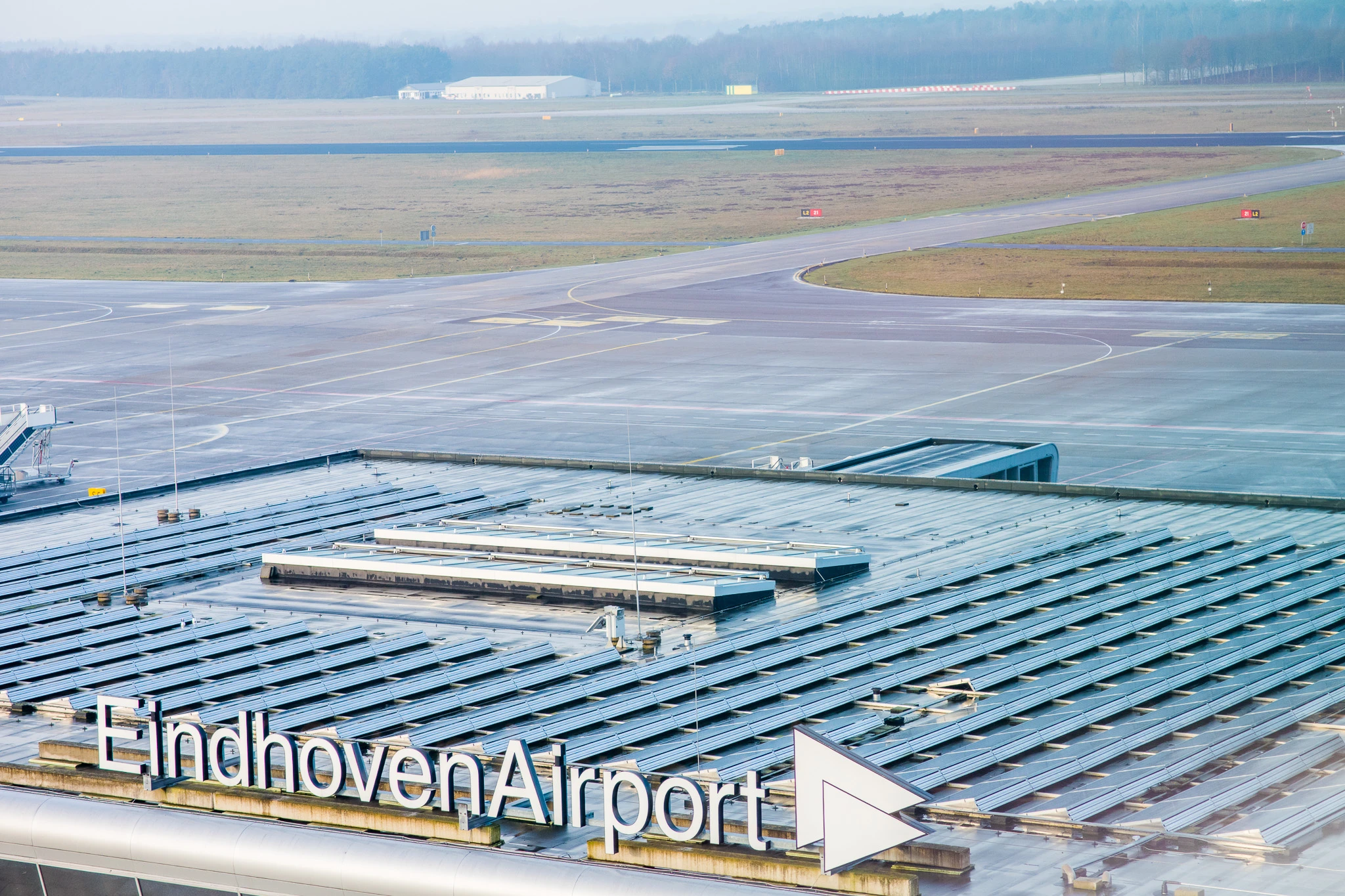
The Dutch aviation sector has set higher ambitions, aiming for at least 14% of all kerosene refuelled at Dutch airports to consist of biokerosene by 2030. Eindhoven Airport, for example, ensures that airlines can also refuel with biokerosene at our airport by providing the appropriate refuelling facilities on the apron.
Electrification and renewable fuel
By 2030 at the latest, all platform equipment at Eindhoven Airport will be electric and there will be a blending obligation with more sustainable aviation fuel ( Sustainable Aviation Fuel). This will reduce CO2 emissions. Eindhoven Airport is preparing a higher than currently (legally) envisaged blending obligation at Eindhoven Airport. Watch our video (only in Dutch) to find more information on this.